Cocktail sauce might seem like just a simple condiment, but it’s a flavor-packed powerhouse that can elevate any seafood dish from ordinary to extraordinary. Picture this: succulent shrimp diving into a tangy, zesty pool of deliciousness. What’s the secret behind that irresistible taste?
Overview of Cocktail Sauce
Cocktail sauce contains a blend of ingredients that work together to create its distinctive flavor profile. Primarily, it features ketchup as a base ingredient, providing sweetness and a rich red color. Horseradish adds a sharp, spicy kick, elevating the sauce beyond mere tomato paste.
Citrus juice, often lemon, contributes acidity and brightness, balancing the sauce’s sweetness. Worcestershire sauce imparts depth with its complex umami notes, enhancing the overall taste. Salt and pepper typically season the mixture, bringing the flavors together for a cohesive finish.
Some recipes may include additional ingredients, such as hot sauce for extra heat or diced celery for crunch. Prepared cocktail sauce is readily available in grocery stores, though homemade versions allow for personal customization. One can adjust the ratio of horseradish to suit individual taste preferences.
With a variety of combinations available, cocktail sauce remains a versatile condiment. Chefs and home cooks alike enjoy experimenting with different herbs and spices to create unique twists. It’s commonly served with shrimp cocktails, though it pairs well with other seafood dishes, making it a staple in many kitchens.
Main Ingredients of Cocktail Sauce
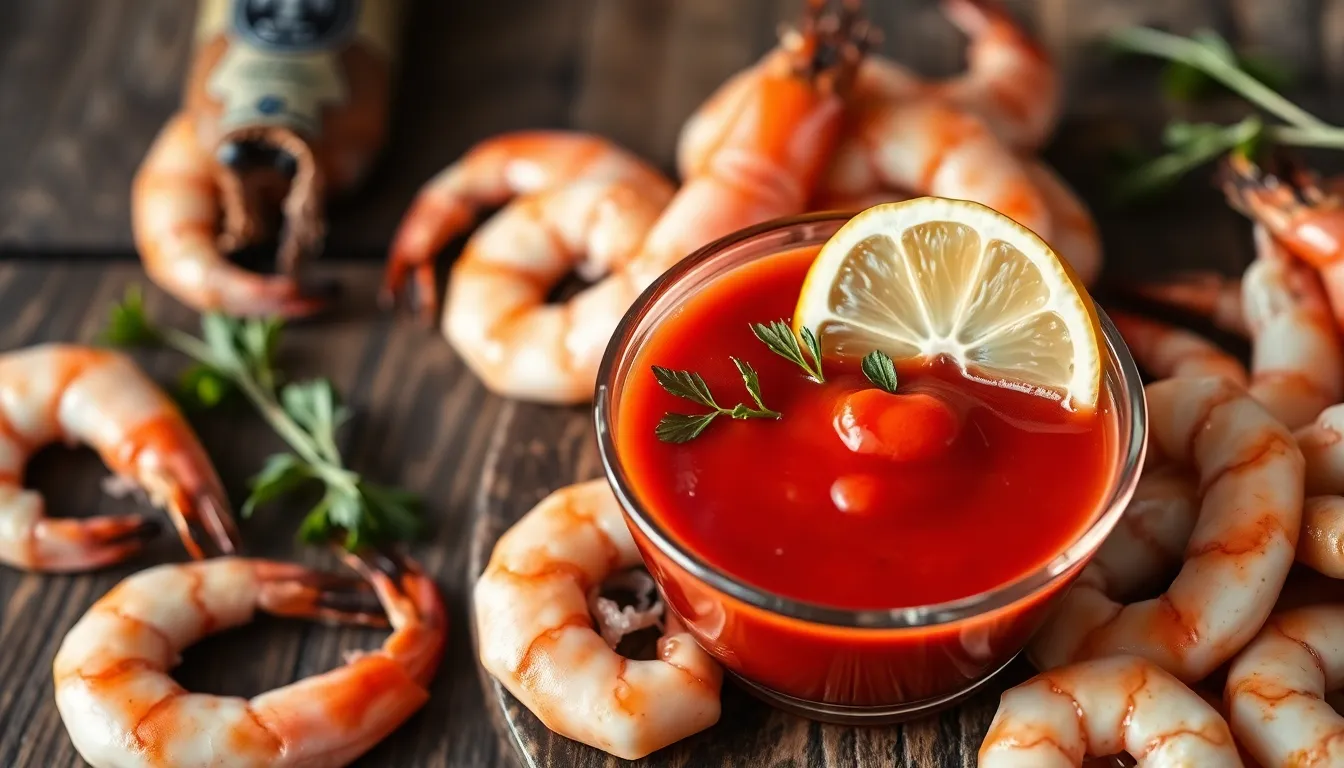
Cocktail sauce features a unique blend of ingredients that create its signature taste. Understanding these components reveals the sauce’s culinary versatility.
Base Ingredients
Ketchup forms the foundation of cocktail sauce, providing sweetness and a vibrant color. Horseradish introduces a bold and spicy note to the mix. Lemon juice brings in a refreshing acidity, balancing the sweetness of ketchup. Together, these base ingredients deliver a robust and flavorful experience.
Flavorings and Spices
Worcestershire sauce enhances the sauce with rich umami depth. It complements the sweetness of ketchup and the spiciness of horseradish. Salt and black pepper add essential seasoning, fine-tuning the taste. Additionally, many chefs experiment with herbs like dill or paprika to elevate the flavor profile. Each variation offers a unique twist, accommodating different palates.
Variations of Cocktail Sauce
Cocktail sauce exhibits a wide range of variations influenced by regional preferences and unique ingredient choices.
Regional Differences
In the United States, cocktail sauce often features a classic blend of ketchup and horseradish. Some regions opt for a spicier kick with additional hot sauce. Coastal areas, particularly in the South, may incorporate local flavors like Creole seasoning for a zesty twist. In contrast, Japanese versions sometimes include wasabi to create a distinct heat. These regional adaptations showcase the versatility and appeal of cocktail sauce across cultures.
Unique Twists
Innovative twists on cocktail sauce often captivate culinary enthusiasts. Some chefs introduce ingredients like avocado or mango for a creamy texture. Others experiment with flavor profiles, adding ginger or cilantro for added depth. A growing trend involves incorporating spicy sriracha for a fiery kick. By customizing the recipe, home cooks create personalized dipping sauces, enhancing their food experiences while enjoying seafood dishes.
Nutritional Information
Cocktail sauce offers a mix of flavors but also has nutritional aspects worth considering. A standard serving of cocktail sauce, approximately two tablespoons, contains around 30 to 50 calories. Low in fat, it generally has less than 1 gram per serving. Sodium levels can vary; some prepared brands might contain 200 to 350 milligrams, making it vital for those monitoring salt intake.
Carbohydrates in cocktail sauce mainly come from ketchup. This contributes roughly 7 to 10 grams per serving, with sugars accounting for around 4 to 6 grams. The presence of horseradish provides minimal calories and carbohydrates while offering potential health benefits like antioxidants.
Vitamins and minerals in cocktail sauce depend on the specific ingredients. While ketchup contributes small amounts of vitamin C, lemon juice can enhance the vitamin content, providing additional health benefits. The overall nutrient profile may differ based on individual recipes, especially with the addition of herbs or spices.
Observing portion sizes is essential when enjoying cocktail sauce. While it complements seafood dishes effectively, moderation helps keep sodium and sugar levels in check. Homemade versions allow for better control over ingredients, enabling users to prioritize health without sacrificing flavor.
Diverse variations might slightly alter the nutritional content. Ingredients like avocado or sriracha introduce healthy fats or additional spice, respectively. Understanding these aspects can guide choices and result in a balanced seafood fare that delights the palate while maintaining nutrition.
Cocktail sauce stands out as a beloved condiment that elevates seafood dishes with its bold flavors. Its unique combination of ketchup and horseradish delivers a perfect balance of sweetness and spice. The adaptability of cocktail sauce allows for endless variations that cater to diverse tastes and preferences. Whether enjoyed in its classic form or with regional twists, it remains a staple in many kitchens. With its low-calorie profile and potential health benefits, cocktail sauce not only enhances the dining experience but also aligns with mindful eating. This versatile sauce truly captures the essence of culinary creativity while complementing a wide array of seafood delights.