In a world where political social issues seem to pop up faster than a cat meme on the internet, it’s hard to keep track of what really matters. From climate change to social justice, these issues shape our lives in ways we can’t always see. But don’t worry; it’s not all doom and gloom. Understanding these topics can actually feel like finding that last slice of pizza at a party—satisfying and worth the effort.
Navigating the complex landscape of political social issues might feel like trying to solve a Rubik’s Cube blindfolded. Yet, with a little insight and humor, it becomes less of a headache and more of an adventure. So buckle up as we dive into the vibrant tapestry of today’s most pressing social concerns, where every twist and turn reveals something new and important.
Overview of Political Social Issues
Political social issues encompass critical topics affecting society today. Climate change represents an urgent concern, driving discussions on sustainable practices. Social justice movements seek to address inequalities, advocating for marginalized communities.
Economic disparities also play a significant role. Wealth inequality has widened in recent decades, complicating access to resources for many. Healthcare access impacts individuals, with disparities in quality and availability creating barriers.
Human rights violations contribute to political tensions globally. Various regions face challenges related to freedom of expression and assembly. Addressing these issues demands global collaboration and awareness.
Additionally, education remains a pivotal social issue. Access to quality education shapes future opportunities for individuals. Persistent gaps in educational attainment often reflect broader societal injustices.
Immigration policies generate heated debate. Policies can create barriers or enhance opportunities for those seeking a better life. These discussions often reveal differing perspectives on national identity and multiculturalism.
Public safety and criminal justice reform are also critical concerns. Increasing awareness of systemic injustice within justice systems motivates calls for reform. Advocates push for policies promoting equity and transparency.
Political social issues evolve continuously, reflecting societal changes and challenges. Engaging with these topics leads to greater awareness and spurs action toward meaningful solutions. Understanding the interconnectedness of these issues fosters better dialogue and informed decision-making.
Historical Context
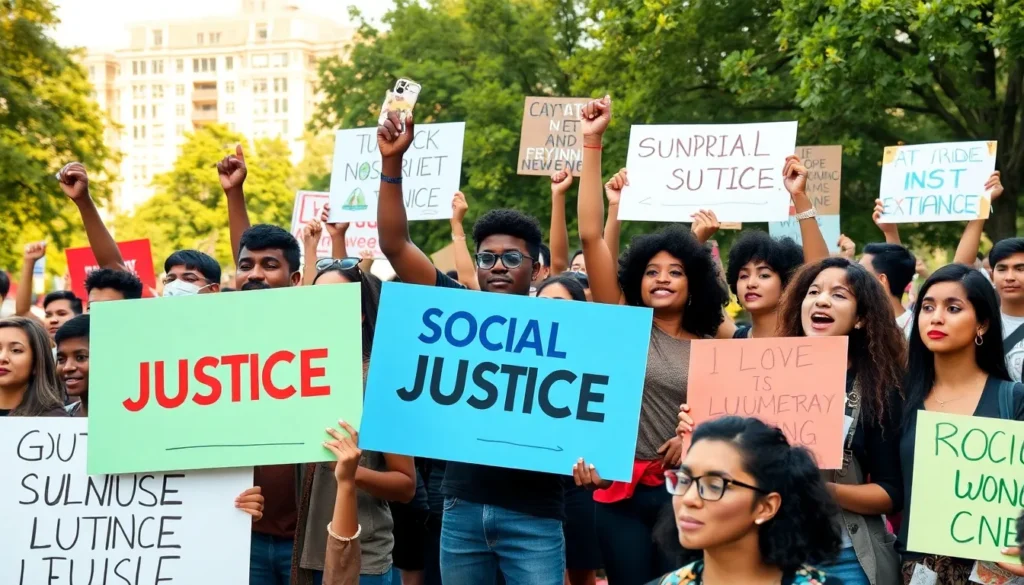
Political social issues have deep historical roots that shape contemporary discussions. Key events and political movements have significantly influenced the landscape of social justice, climate action, and more.
Key Events
The Civil Rights Act of 1964 marked a pivotal moment in U.S. history, as it aimed to end discrimination based on race, color, religion, sex, or national origin. This legislation sparked greater awareness and activism surrounding social justice. The 1970 Earth Day celebration catalyzed the environmental movement, prompting national conversation about climate change. In 2008, the election of Barack Obama signified progress in racial equality, representing hope for minority rights. More recently, the protests following George Floyd’s murder in 2020 reignited discussions on police reform and systemic racism. Each of these events highlights the ongoing struggle for equity and justice.
Political Movements
Grassroots movements have emerged in response to political and social challenges. The LGBTQ+ rights movement has fought for equal rights and recognition, culminating in the landmark Obergefell v. Hodges decision in 2015, which legalized same-sex marriage. The Women’s March in 2017 underscored the continued demand for gender equality and reproductive rights. Environmental movements like Fridays for Future actively raise awareness about climate change impacts. Advocacy for immigrant rights also intensified, revealing opposing views on national identity and policy reform. Each movement contributes to the broader dialogue surrounding civil rights and social justice across generations.
Current Political Social Issues
Contemporary political social issues demand attention, shaping the fabric of society. Several concerns, including economic inequality, racial injustice, and gender discrimination, highlight ongoing struggles for equity.
Economic Inequality
Economic inequality poses significant challenges, affecting millions. The wealth distribution gap increasingly widens, with the top 1% holding approximately 40% of global wealth. Low-income individuals often experience barriers regarding education and healthcare access. Communities facing poverty lack resources, limiting opportunities for upward mobility. Recent reports indicate that at least 25% of Americans experience financial instability, further exacerbating social tensions. Advocates advocate for policies aimed at wealth redistribution and improving access to essential services.
Racial Injustice
Racial injustice persists as a critical issue, influencing societal dynamics. Systemic racism remains embedded in various institutions, impacting marginalized communities. According to studies, Black Americans are three times more likely to be killed by police compared to their white counterparts. Disparities in criminal justice, employment, and education highlight the ongoing struggle for civil rights. Awareness campaigns, protests, and grassroots movements strive to address these injustices and foster dialogue around systemic change. Advocacy efforts emphasize the importance of racial equity in legislation and social initiatives.
Gender Discrimination
Gender discrimination continues to affect individuals across various sectors. Women earn roughly 82 cents for every dollar earned by men, showcasing the persistent wage gap. In addition, women of color face even wider disparities, earning significantly less than their white male counterparts. Representation in leadership roles remains lacking, with only about 30% of senior-level positions held by women. Various initiatives focus on promoting gender equality and empowering women in the workforce. Advocates highlight the need for policies addressing workplace harassment and enhancing parental leave to create an equitable environment.
Impact on Society
Political social issues significantly shape societal dynamics. Understanding their consequences fosters informed participation in crucial discussions.
Social Cohesion
Social cohesion hinges on collective identity and shared values. Economic disparities often fracture communities, leading to divisions among different groups. Racial injustice further exacerbates societal tensions, as marginalized communities frequently face exclusion. Enhancing dialogue among diverse populations promotes unity and understanding. Grassroots initiatives focusing on inclusion play a critical role in bridging gaps. Contemporary movements emphasize empathy, aiming to connect individuals beyond their differences. Their collaborative efforts encourage shared goals, fostering a sense of belonging across demographics.
Policy Changes
Policy changes emerge as a response to pressing social issues. Legislative measures targeting economic inequality aim to alleviate wealth disparities. Access to quality education and healthcare remains central to proposed reforms. Policies promoting racial equity seek to dismantle systemic barriers, enhancing opportunities for marginalized groups. Gender equality initiatives address the wage gap and aim to increase representation in leadership. Advocacy groups often drive these changes, influencing lawmakers and public opinion. Engaging communities in the policy-making process ensures that diverse perspectives shape effective solutions. Their insights enhance the relevance and impact of new laws.
Navigating political social issues is essential for fostering a more equitable society. Engaging with topics like climate change and social justice not only enhances understanding but also encourages active participation in meaningful conversations.
As these issues continue to evolve, staying informed is crucial for making impactful decisions. Grassroots movements and advocacy play a vital role in shaping policies that address economic disparities and promote human rights.
By embracing the complexities of these challenges, individuals can contribute to a more just and inclusive future. Each step taken toward awareness is a step toward positive change.